
This flag represents our movement around the world. It has a lovely origin story and a beautiful meaning. We hope that more people will use this flag.
Display the flag, speak about its meaning, and share the pride.
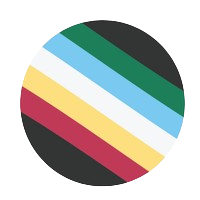
Parallel lines close together for solidarity
A vital part of disability pride is unity and mutual support within a community of disabled people, regardless of our differences. The closely spaced stripes symbolise a tight-knit community made up of diverse disabilities.

Black for oppression and for resistance
Black is the colour of mourning, but it is also the colour of ninjas and resistance. This dual symbolism of the black flag reflects the two sides of the disability pride movement: acknowledging and protesting injustice, while also celebrating identity and fighting for pride in what is good.
Green for Sensory Disabilities
Sensory disabilities include low vision, deafness and the like. The most common type of vision impairment is red-green colourblindness, affecting 8% of men. In the picture we see someone making the Auslan sign for green and the braille for green as well as the test for red-green colourblindness.

Blue for mental illness
Blue is traditionally associated with the mind and with depression.

White for invisible and undiagnosed disabilities
This is a good colour to have in the middle, because almost every disability falls under this category at some point. At the very least, many of us have some misunderstood or invisible symptoms.
Yellow for Neurodiversity
The chemical symbol for gold is “Au” so this stripe represents neurodiversity. But it goes further than the disabilities most commonly associated with neurodiversity to embrace all brain and mind differences from cerebral palsy to brain injury.

Red for Physical Disabilities
For centuries, the colour red has been associated with flesh and blood in flags and logos.
 Disability Pride Sydney